Designing for the Reader You Can’t See — Yet Can’t Ignore
Published:
19 December 2025
Written by

Esben Gudbrandsen
UX Design Lead

For years, we've focused on creating digital experiences for human users. People who see, feel, and interpret design through layout, colour, rhythm, and interaction.
Meet the AI reader.
It sees something entirely different: the underlying skeleton of the website. The HTML. The hierarchy. The relationships between sections. The clarity of language. The logic of content.
AI builds its interpretation of what a website — and a brand — represents based purely on structure. And for many people, that AI-generated interpretation will increasingly be the first impression they receive.
Not a visitor behind a screen. Not someone scrolling, reacting to visual cues, making sense of what we crafted. It doesn't experience any of this. It processes text, hierarchy, and relationships between content elements. It sees something entirely different: the underlying skeleton of the website. The HTML. The hierarchy. The relationships between sections. The clarity of language. The logic of content.
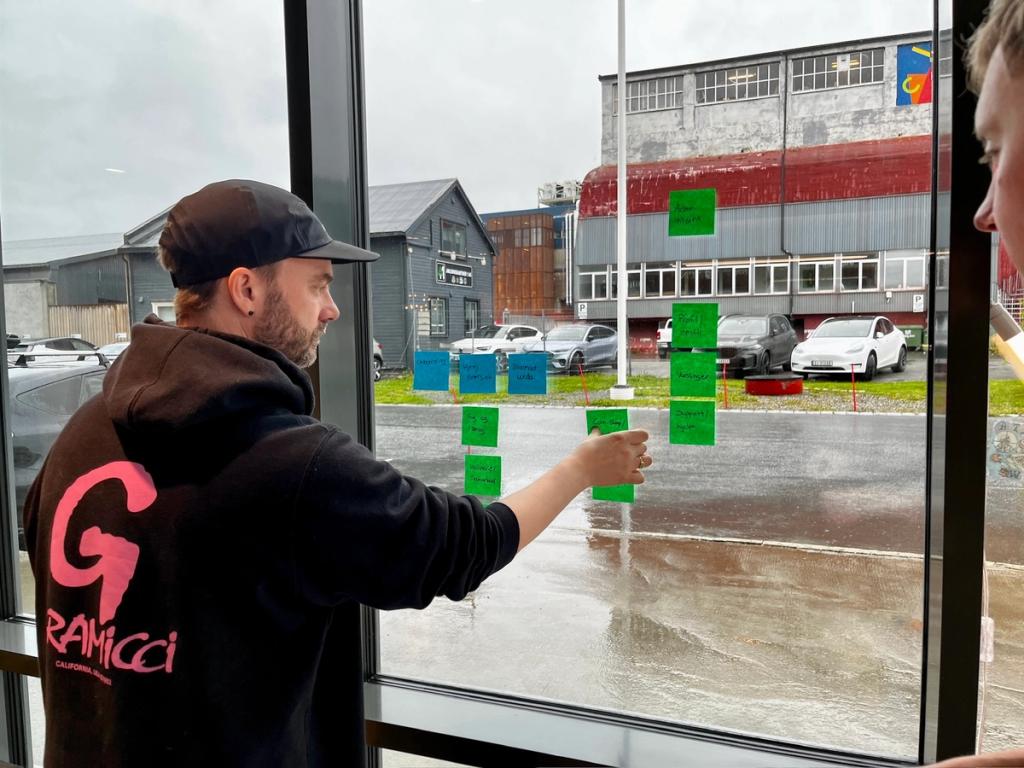
Two readers, one solution.
This reality adds a fresh dimension to UX design. Human experience is still the centre of everything. But we now design for two audiences at once: the person who sees the interface, and the system that reads the structure beneath it.
If our hierarchy is strong, our message stays intact. If it isn't, AI fills the gaps on its own. That guess becomes the response your potential customers hear when they ask ChatGPT or Perplexity about your product.
The intentions behind a website matter more than ever.
This is how it works.
When someone asks an AI tool "What does Company X do?", the large launcher model [LLM] reads your page headings, content structure, and titles. If your hero section says "Transform Your Future" but your actual service is buried in a generic "Solutions" dropdown, AI misses it entirely.
A visually stunning card component means nothing if it's built from generic containers without semantic meaning. But semantic elements like articles, sections, and proper heading hierarchy? That's a map AI can follow.
Think of it like this: a beautifully designed poster is meaningless to someone using a screen reader. AI experiences your website the same way — structure and meaning matter, not visual polish.
Clear section titles aren't just helpful for users — they help AI understand meaning. Headings like "Our Approach" communicate nothing. "How We Build Digital Products" tells AI — and humans — exactly what's in that section.
Content needs to be placed where it logically belongs. Not hidden deep inside components that function beautifully for humans but are invisible to machines.
This doesn't mean redesigning the web from scratch. It means designing with more awareness of how information is interpreted.
A page that is thoughtfully structured for AI is almost always easier for real people to understand as well. Meaning becomes sharper. Navigation becomes clearer. The message becomes more consistent, no matter who — or what — is reading it.
Three questions to ask about your current site
Most websites were designed for human readers alone. If you're unsure whether yours is ready for this new reality, ask yourself:
- If you removed all visual design, would the HTML structure alone tell your story?
- Do your headings describe content, or just create visual rhythm?
- Could someone understand your core offering from reading only your page titles and H1s?
If you're uncertain about any of these, you're not alone. But it's worth investigating.
Where to start
Start by questioning what your website communicates before design does any of the work.
If someone had to understand your site without seeing it — only through the way information is ordered, prioritised, and connected — would they get it right?
Would they understand what you do, what matters most, and how everything fits together?
If the meaning only becomes clear once visuals step in, that’s not a technical issue. It’s a structural one. And that’s where to begin.
The business stakes
This shift is more than a technical detail. More people rely on AI assistants to answer questions, compare services, and summarise information. The version of your brand that these systems pick up becomes part of your public presence.
If your website communicates clearly at a structural level, AI presents your company accurately. If not, it may simplify, rearrange, or misunderstand your message. That becomes the version your audience sees.
Consider a concrete example: A potential client asks an AI assistant "Which Norwegian agencies specialize in brand strategy for tech companies?" If your services page lists "Strategy" without context, but your competitor clearly structures their offering as "Brand Strategy for Technology Companies," guess whose name appears in the answer.
How we're approaching it
At Nonspace, we believe this is an opportunity to strengthen the foundation of digital brands. By designing for both human readers and AI readers, we help companies present themselves consistently across the growing platforms where their content appears.
This isn't a passing trend. Information is no longer only consumed directly — it's also interpreted and retold by systems in between. Designing for that ecosystem is part of creating strong digital experiences today.
It brings us back to the core of UX:
Make things easier to understand, easier to navigate, and easier to trust. Get the structure right, and both the human visitor and the AI interpreter leave with the same understanding. That consistency — between what someone experiences and what AI reports — is the new baseline for digital presence.
It's not more work. It's better work.