Insights
AI & Automation

What's the point of people?

Portrait of Tom Morgan, Strategic Leader and Partner at Nonspace.

Tom Morgan

Head of Strategy | Partner and Owner

Date

4 June 2026

A strategic counterpoint for the age of automation

A vibrant concert scene with a crowd surfer and lively audience members enjoying a live performance

The story about AI and people has one ending in wide circulation, and you already know it. The machines take the work, the jobs go, the spending goes with them, and the system quietly eats itself. It is a serious argument, and it may well be right. It is also very nearly the only one being made, which is the very reason to stop and ask what it leaves out.

Every condition that makes the gloomy reading true makes a second reading possible, and almost nobody is looking at it. As the world fills with the easy, the fast and the automatic, one thing quietly gains value. People. Not as a cost to be cut, but as the thing customers, talent and whole communities begin to want and to trust, precisely because it is turning rare.

That second reading is a competitive position, not a consolation prize. It shows up differently for brands as employers, as places, as products and as services. If you lead one, build one or advise one, this is meant to be useful, not comforting.

What is the point of people?

Almost no one says it aloud. They do not have to. The arithmetic says it for them. We measure a company by the profit it makes, not the lives it sustains. Productivity is output divided by people, so progress, measured honestly, is the steady art of making more with fewer. Every firm that automates, trims and posts a better margin has answered the question in public without ever having to ask it.

For most of modern history the answer stayed hidden, because a company could not run without people to build, sell, mend and count. The firm existed because people did. That is the part now changing, and changing fast.

The trap

Mo Gawdat, who ran the business side of Google's moonshot division, puts the change about as bluntly as anyone. Capitalism rests on a simple trick. Hire a person for a dollar, sell what they make for two, keep the difference. The trick depends on human labour, and artificial intelligence removes it. As the cost of making things falls toward zero, wages fall with it, and wages are what people spend. Automate to win, and you slowly dismantle the customer you were automating for. In March this year two economists, Brett Hemenway Falk of the University of Pennsylvania and Gerry Tsoukalas of Boston University, turned that intuition into a formal proof and called it the AI layoff trap. They ran the obvious remedies through the model, universal income, retraining, worker ownership, taxes on capital, and found that none of them held the line. The only thing that did was a tax on automation itself, a charge each time a person is replaced. Every firm behaves rationally. The economy fails anyway.

I think they are probably right. That is not the interesting part.

Before you read on, let me tell you where I am standing, because we all arrive carrying a worldview and you may as well see mine. I am an optimist by nature. Not the wishful kind, and not the kind selling anything. A strategist's job is to read the conditions of the present and work them forward, to lay out the possible, the avoidable and the desirable, and that is what I am doing here. I will be playful in places and provocative in others. None of it is a position I am dug into. On a subject this large, with so many people losing their heads, it seems worth taking a breath and lifting ours.

We have done this before

The shape of this is not new. Mechanisation arrived in the eighteenth century with the same swagger and the same fear. Machines could do the work of many. Mills replaced cottages, factories replaced workshops, and productivity by the new measure exploded. So did the sense that people were being written out of their own economy.

What followed was not surrender. It was a century of counter-responses, working with each other and against each other. Trade unions forced power back into workers' hands. An enormous spread of wealth created something genuinely new, the citizen with money to spend, who turned out to be the worker in another coat. Cities, public schooling and a long push for equality remade society. Marx wrote his answer to industrial capitalism. William Morris and the Arts and Crafts movement led a revolt against the soullessness of the machine. None of it was tidy, and none of it arrived in order. Together it built the world we still live in.

So the real question is not whether automation frightens us. It is whether it is genuinely different from every other time the machine looked set to make us surplus. I am not convinced it is.

The counterpoint

So. Back to the trap.

Strategy, more often than not, is the discipline of framing the contrary position. The mainstream reads one thing in the conditions. The strategist's worth is to see the other thing that is also there, and to name it before anyone else does. The negative may be true. So may its opposite. Both can be read off the very same facts.

Here is the opposite, read off Gawdat's own facts. The same automation that destroys the demand for human labour can manufacture a demand for human presence. When everything is easy, fast, automatic and identical, the human stops being the expensive thing and becomes the wanted thing. Not as nostalgia (extreme idea). As a preference. In a world where every image can be generated and every interaction simulated, the questions people start to ask are simple and pointed. How many people work here? Who is actually behind this? Is there a point to the people, and can I feel it?

There is a tell in how we measure things. A physicist we work with pointed out that Europe's energy ratings, the EPC label on every building, grade energy used per square metre, not energy used at all. A large, well-insulated house can burn more in a year than a small draughty one and still score an A. The instrument is not broken. It is measuring efficiency exactly as designed, and quietly skipping the question of how much is enough.

Productivity per employee has the same blind spot. Output over people, progress as the shrinking of the denominator. It is technically correct, and it tells you nothing about whether a company is creating prosperity or stripping it out. The contrary position wears that denominator with pride. How many livelihoods a thing sustains stops being a cost to hide and becomes a signal to show.

The obvious objection should be met head on. Reward a company for the sheer number of people it carries and you reward make-work, the padded payroll, the job invented to look busy. The Soviets tried precisely that and drowned in it. The answer is not maximum employment. It is sufficient. Enough prosperity created, enough livelihood enabled, enough real contribution to the life around the firm. A measure of human consequence, not human headcount. Their mistake was confusing the two. The risk now is the opposite mistake, deciding people were never the point at all.

None of this is the artisanal move, the handmade tag at a premium for those who can afford the indulgence. That is the same small thinking as before, simply pointed the other way. It is a stance available to a bank, a bus company, a software firm, anyone willing to be visibly and accountably human in a market racing to be neither.

What a we're actually talking about

To take that stance seriously you have to be honest about what a brand actually is, which is older and stranger than the marketing department would have you believe.

We treat brand as a modern, commercial word, and it is. But the thing it names is ancient. Symbol, ritual, a sense of place, a story worth repeating, the patronage of beautiful things, belonging, a network that holds people together across generations. People were doing all of that long before anyone thought to sell it. The most complete example ever built is not a company at all. It is the Church. Cross, mass, Rome, the ceiling Michelangelo was paid to paint, congregations that still gather in place and time. That is not to reduce people’s faith, I mean it in the reverse. It says that what we now call a brand is a thin commercial echo of one of the deepest things people do.

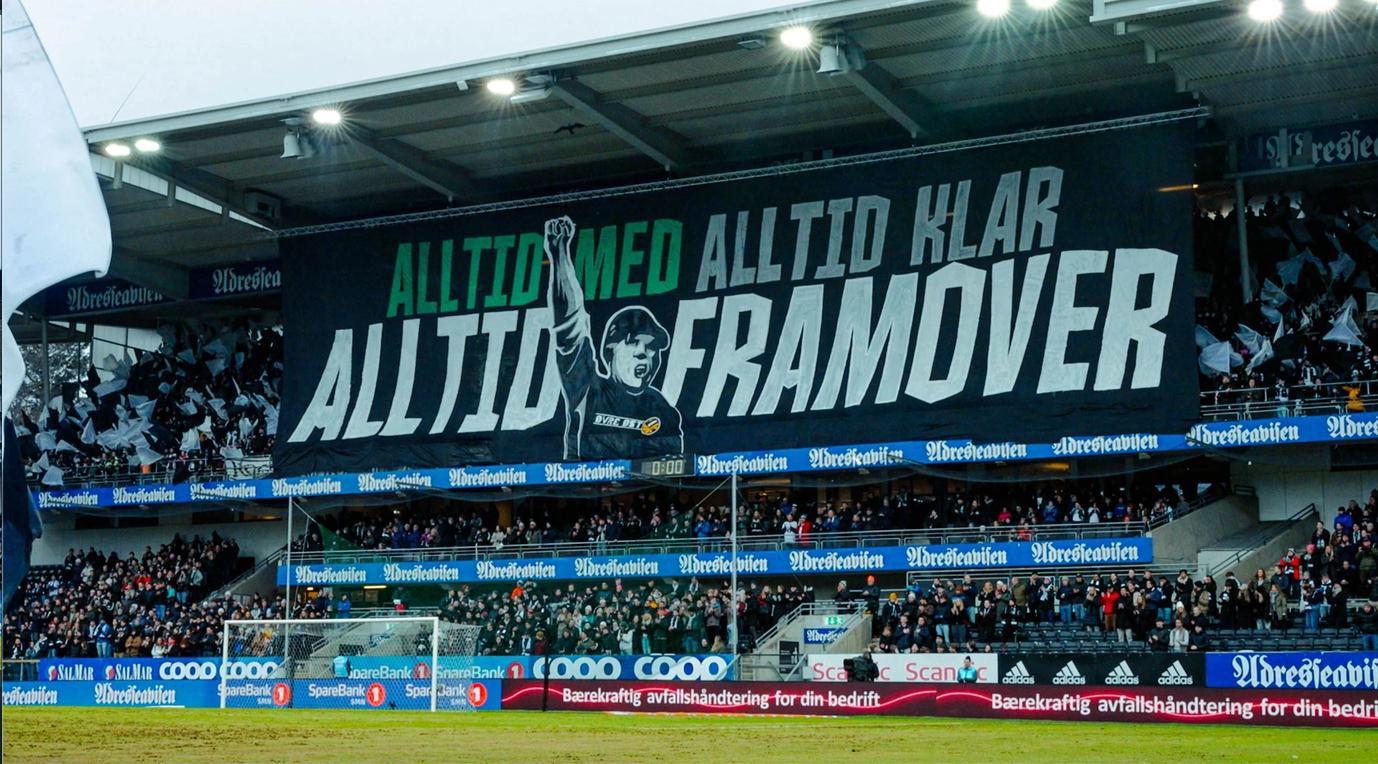
You do not have to reach for the sacred to see it. Reach for football. A club is generational, inherited rather than chosen, drenched in ritual and rooted in a place, and it is unmistakably a brand platform. It was built in four or five generations, not two thousand years, around an entirely worldly passion. Here in Norway the point is sharper still, because the club mostly belongs to the people who love it. Rosenborg, which we have always argued is more than a football club. Brann, which is simply part of what it means to be from Bergen. Clubs run, in good part, on dugnad, on members giving their time because the thing is theirs. While the rest of Europe had to rise up to stop its biggest clubs being turned into a closed, efficient, investor-owned product, Norwegian football had largely refused that turn long before, by design. The counterpoint, already built, and in the stands every weekend.

How the value gets shared

The argument has now reached the Vatican, which tells you something about its scale. This May, Pope Leo XIV published an encyclical, Magnifica Humanitas, on safeguarding the human person in the age of artificial intelligence, consciously echoing Leo XIII, who did the same for the age of the factory. He frames the choice through two old building sites. A tower raised for efficiency and a single direction, and a city wall rebuilt afterwards by many hands, each family taking its own section. His warning is against the first kind of project, the one that puts efficiency above the dignity of the people inside it.

We have a plainer word for the wall rebuilt by many hands. Dugnad. It does in a single breath what the encyclical needs a chapter of scripture to say. And it points at a practical question that is not theological at all. How is the value shared, by whom, and on purpose?

This is where brand stops being a campaign and becomes the operating system of the company. The shallow version of purpose was a manifesto film and a line on the website while the business carried on regardless. The serious version reorganises how the company actually works. Who it employs and why. What value it creates and where that value lands. What networks it holds together. At that depth, purpose is not decoration on the business. It is the logic underneath it, and it shows up in hiring, in pricing, in the work the company refuses.

It also forces a more creative idea of tax than the economists' levy on automation, the charge for shedding people we met earlier. That answer treats the symptom. Leo XIV reaches instead for an older principle, the universal destination of goods, and extends it to the new property of our age, the data, the algorithms, the platforms. The claim is that when the value these create, pools in very few hands, something is owed back, not as charity but as justice. That turns tax from a punishment into a design question. How is the windfall shared, by design, from the start?

Norway has answered a version of that question once already. The oil fund is a windfall treated as belonging to everyone, including people not yet born. A human dividend, running at the scale of a nation. Allemannsretten, the right to roam, writes the same instinct into law, where property exists but bows to common access. The cooperatives do it in the structure of the firm itself, TINE owned by its farmers, Coop by its members, companies built for the people they sustain rather than for extraction from them. The radical-sounding proposal turns out to be, in large part, ordinary Norwegian practice.

I should name the awkward part rather than bury it. The dividend that funds all this came out of the ground, from the most efficient extraction story of the last century. Norway is not innocent here, and the model is not clean. But that is rather the point. The country that grew rich on extraction is also the one that decided the proceeds should be held in common and handed forward. The instinct survived the contradiction, which is more than most economies can claim.

If the lens is any good it should work outside Norway and outside football, and I think it does. Food is the most human network there is, and the counterpoint to the ghost kitchen and the drone is the table, the plain fact that nobody dreams of eating alone forever. Technology is the hardest case, because it is the field doing the automating, and the contrary position there is the boldest of the lot. Tools built to need you and connect you, rather than to replace you and bill you for the privilege. I could go on, into fashion, into the tax office, into what leadership becomes when judgement is the last thing a machine cannot do. But the better use of the lens is yours, not mine.

The [human] edge

So here is the inversion we have been circling, and it is a brand idea before it is an economic one.

Human Capital is what people give a company. Human Resources files them as inputs to be optimised. 'Human Profit' turns the question around. What does a company give to people, and can anyone feel it? The lived sum of who a company employs, what it builds, and whose lives it touches... brand.

As the automated market converges on models and prices, this is the difference customers, talent and communities will actively look for, the thing they choose and trust and stand behind.

Not because it is scarce, but because it is real, and cannot be faked or cloned.

The human edge is not a moral plea. But because it be the strongest competitive position while others enter an arms race for efficiency; open to almost any business confident enough to be different.

I am not an economist, and this is not a blueprint for policy. I am a strategist who strongly suggests the language used for what a company is for, has gone thin, at exactly the moment we need it most. If you find it, you win!

Portrait of Tom Morgan, Strategic Leader and Partner at Nonspace.

Tom Morgan

Head of Strategy | Partner and Owner

You're important

The argument I most want is the one I have not heard yet. Tell me where I am wrong. Send me the version of this I should have written. The most useful thing a wrong idea can do is provoke a better one.